
硅胶,这个听起来充满“科技感”的名字,早已渗透到我们生活的方方面面:从婴儿奶嘴、烘焙模具,到医用导管、电子设备散热垫,处处可见其身影。它既像塑料,又像橡胶,性能独特,也常引发误解。以下五个关于硅胶制品的“冷知识”,将带你了解这一材料不为人知的真相。
Silicone, a name that evokes a strong sense of ‘technology,’ has long permeated every aspect of our lives: from baby pacifiers and baking molds to medical catheters and electronic device heat dissipation pads, its presence is ubiquitous. It resembles both plastic and rubber, possesses unique properties, and is often misunderstood. The following five lesser-known facts about silicone products will help you understand the hidden truths of this material.
一、硅胶不是“胶”,也不是塑料。很多人望文生义,认为硅胶是一种胶水或粘合剂,甚至将其与塑料混为一谈。实际上,硅胶(更准确地说应称为硅橡胶)是一类以聚硅氧烷(主链含-Si-O-Si-结构)为主要成分的合成材料。
First of all,silicone isn’t actually ‘glue,’ and it’s not plastic either. Many people misunderstand the term and think silicone is some kind of glue or adhesive, or even confuse it with plastic. In reality, silicone (more accurately called silicone rubber) is a type of synthetic material mainly made from polysiloxane, which has a main chain structure of -Si-O-Si-.
它介于合成橡胶和合成塑料之间,是一种独特的聚合物“混种”。与塑料的主要区别在于,传统塑料的主链是碳链,而硅胶的主链是硅氧键,这赋予了它远超一般塑料的耐高低温、电绝缘和化学稳定性。它也不同于我们日常使用的有机硅密封胶(常称“玻璃胶”),后者属于室温硫化硅橡胶的一种应用形式,而硅胶制品是一个更广泛的材料类别。
It lies between synthetic rubber and synthetic plastic, constituting a unique polymer ‘hybrid.’ The main difference from plastic is that while conventional plastics have carbon chains as their backbone, silicone’s backbone consists of silicon-oxygen bonds, which endow it with far superior resistance to high and low temperatures, electrical insulation, and chemical stability compared to ordinary plastics. It is also different from the silicone sealants commonly used in daily life (often referred to as ‘glass sealants’), which are a form of room-temperature vulcanized silicone rubber, whereas silicone products represent a broader category of materials.
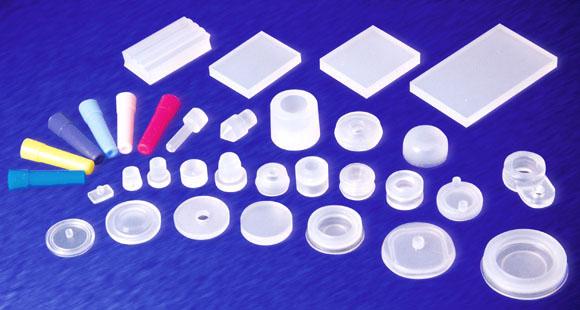
第二,食品级≠可食用,但安全有保障。 冰墩墩的“冰壳”变黄事件曾引发热议,其外壳采用的正是食品级硅胶。但必须明确一个核心概念:食品级硅胶指的是可以与食物直接接触的材料,其性质稳定,不会释放有毒物质,但这绝不意味着它可以食用。
Second, food-grade ≠ edible, but it is safe. The incident of Bing Dwen Dwen’s “ice shell” turning yellow once sparked heated discussion; the shell is made of food-grade silicone. However, it is important to clarify a key concept: food-grade silicone refers to a material that can come into direct contact with food. Its properties are stable and it does not release toxic substances, but this does not mean it is edible.
食品级硅胶之所以安全,是因为其配方和添加剂(如抗氧剂、稳定剂)受到严格限制,必须符合国标、欧标等要求。例如,婴儿奶嘴和硅胶烘焙模具都属于此类。但即便是食品级,长期使用后也可能因紫外线(UVA)老化而变黄、变硬,这是材料本身特性决定的不可逆过程。
Food-grade silicone is considered safe because its formulation and additives (such as antioxidants and stabilizers) are strictly regulated and must comply with national standards, European standards, and other requirements. For example, baby pacifiers and silicone baking molds fall into this category. However, even food-grade silicone may turn yellow and harden after prolonged use due to ultraviolet (UVA) aging, which is an irreversible process determined by the inherent characteristics of the material.
第三,颜色和透明度并非品质标尺。 判断硅胶品质,不能仅凭外观。一个简单有效的“土办法”是:用力挤压或扭转硅胶制品的平面,如果看到白色或发白的痕迹,很可能说明产品中掺杂了填料。纯净的硅胶在拉伸或扭转时不会出现明显的颜色变化。市面上色彩鲜艳的硅胶产品,如果使用了劣质颜料(特别是含有机锡类或重金属的颜料),可能导致“催化剂中毒”,影响硅胶的正常硫化,甚至带来健康风险。因此,颜色并不能直接反映品质,而“扭转不变白”可作为判断纯度的辅助依据。
Third, Color and transparency are not indicators of quality. The quality of silicone cannot be judged solely by its appearance. A simple and effective traditional method is to firmly squeeze or twist the flat surface of a silicone product; if white or whitening marks appear, it likely indicates the product contains fillers. Pure silicone does not exhibit significant color changes when stretched or twisted. Vividly colored silicone products on the market, if made with inferior pigments (especially those containing organotin or heavy metals), may cause ‘catalyst poisoning,’ affecting the proper curing of the silicone and potentially posing health risks. Therefore, color alone does not directly reflect quality, whereas ‘not turning white when twisted’ can serve as an auxiliary criterion for assessing purity.
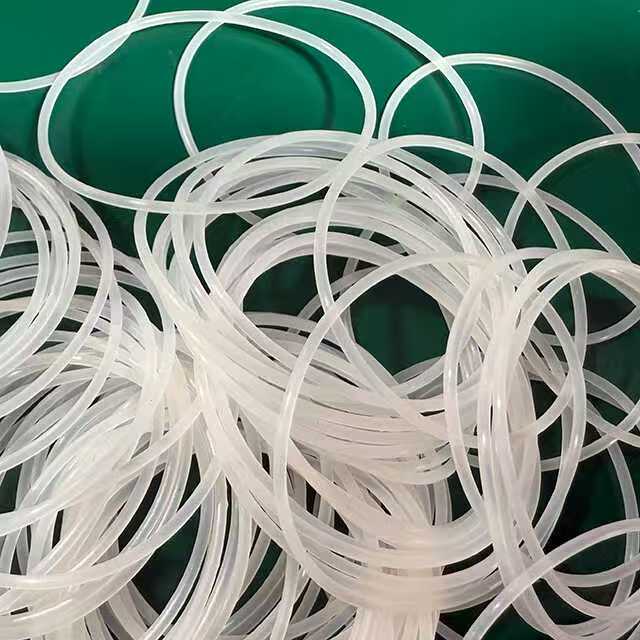
第四,“热粘”与“冷粘”决定密封圈耐用性。硅胶密封圈这类产品,其耐用性和外观很大程度上取决于粘接工艺。市面上主要有“冷粘”和“热粘”两种方式。
- 冷粘:成本较低,全程手工操作。将调制好的胶水涂在密封圈两端,在夹具上对接成型。其不足在于,胶水用量和按压力度依赖工人手法,易出现粘接不牢、胶水溢出影响美观或拉力不足的问题。
- 热粘:使用专门的热粘机器,通过脚踏控制完成粘接。虽然胶水成本更高,但产品外观更漂亮,产能更高,粘接强度和一致性也更好。
因此,看似相同的密封圈,其耐用性和品质差异可能源于粘接工艺的不同。
Fourth, “hot bonding” and “cold bonding” determine the durability of sealing rings. For products like silicone sealing rings, their durability and appearance largely depend on the bonding process. On the market, there are mainly two methods: cold bonding and hot bonding.
Cold bonding: lower cost and entirely done by hand. The prepared glue is applied to both ends of the sealing ring, which are then joined on a jig. The downside is that the amount of glue and the pressure applied depend on the worker’s technique, which can lead to weak adhesion, glue overflow affecting appearance, or insufficient tensile strength.
Hot bonding: bonding is carried out using a specialized hot bonding machine controlled by a foot pedal. Although the glue is more expensive, the product has a better appearance, higher production efficiency, and improved bonding strength and consistency.
Therefore, sealing rings that appear identical may differ in durability and quality due to differences in the bonding process.
第五,硅胶也有“中毒”一说。 在硅胶制品的生产,尤其是加成型(AB组分)液体硅胶的操作中,存在“中毒”现象。这里的“中毒”并非指对人体有害,而是指硅胶无法正常固化。
Fifth,there is also a notion of ‘poisoning’ in silicone. In the production of silicone products, especially during the handling of addition-curing (AB component) liquid silicone, a ‘poisoning’ phenomenon may occur. Here, ‘poisoning’ does not refer to harm to the human body, but rather to the inability of the silicone to cure properly.
加成型硅胶的硫化依赖铂金催化剂。如果操作时混入了某些物质,如缩合型硅胶的硫化剂、含硫、磷、氮的化合物,以及某些有机锡类或重金属物质,催化剂就会失效,导致A、B组分混合后长时间不凝固或固化不完全。操作时需确保工具和容器洁净,并严格避免接触可能导致“中毒”的物质。
Platinum-catalyzed addition silicone relies on a platinum catalyst for curing. If certain substances get mixed in during the process—like condensation silicone curing agents, sulfur-, phosphorus-, or nitrogen-containing compounds, or some organotin or heavy metal substances—the catalyst will fail, causing the A and B components to either not set for a long time or not cure completely. When working with it, make sure your tools and containers are clean, and strictly avoid contact with anything that could ‘poison’ the catalyst.
这些冷知识告诉我们:硅胶不是普通日用品,而是一种科学设计、性能均衡、安全可靠的现代材料。了解它,我们才能避开劣质产品,真正享受高品质硅胶带来的便利与安心。
These little-known facts tell us that silicone isn’t just an ordinary household item; it’s a scientifically designed, well-balanced, safe, and reliable modern material. Understanding it helps us avoid low-quality products and truly enjoy the convenience and peace of mind that high-quality silicone brings.